Sunday, April 22, 2012

Spring...


Hello everyone!

I can’t believe but the spring is here, I’m so happy.

Look that:

 
There isn’t any snow, I can see the toys on the yard of the kindergarten.  A month ago the sand pit was under the snow.

In the kindergarten the kids draw rainbow and coloured numbers with me:  


The kids from my group performed an Estonian play („Muinasjutt valgest liblikast”) about butterflies and spring. The show was very nice and the kids were so cute. I made 3 floral tributes for the 3 girls who played the flowers:


I tried to help decorete the group with paper tulips:


Enjoy yourselves and take care!!

Friday, April 20, 2012

My country - Hungary

Hi Everybody!

Now, I'd like to introduce my country, Hungary. Let's see it!

  • Hungary (Hungarian: Magyarország) 
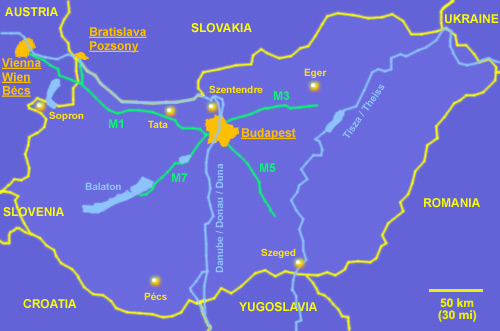
  • It is situated in the Carpathian Basin and is bordered by Slovakia to the north, Ukraine and Romania to the east, Serbia and Croatia to the south, Slovenia to the southwest and Austria to the west
  • The capital and largest city is Budapest
  • Hungary is a member of the European Union
  • The official language is Hungarian, also known as Magyar, which is part of the Finno-Ugric group
  • Area  -  Total 93,030 km2
  •  Population  -  2011 estimate 9,979,000

The Hungarian flag

  
Coat of Arms of Hungary


Hungary


About the geography:

  • The most important plain regions include the Little Hungarian Plain in the west, and the Great Hungarian Plain in the southeast
  • The highest elevation above sea level on the Great Hungarian Plain is 183 m
  •  Transdanubia is a hilly region with a terrain varied by low mountains
  • Transdanubia contains Lake Balaton, a major body of water
  • The highest mountains of the country are located in the North Hungarian Mountains, Kékes at 1014 m
  • Hungary has two main river: the Danube and the Tisza
  • The second largest lake in the Carpathian Basin is the artificial Lake Tisza
  • Hungary has 10 national parks, 145 minor nature reserves and 35 landscape protection areas

 River Tisza


River Danube


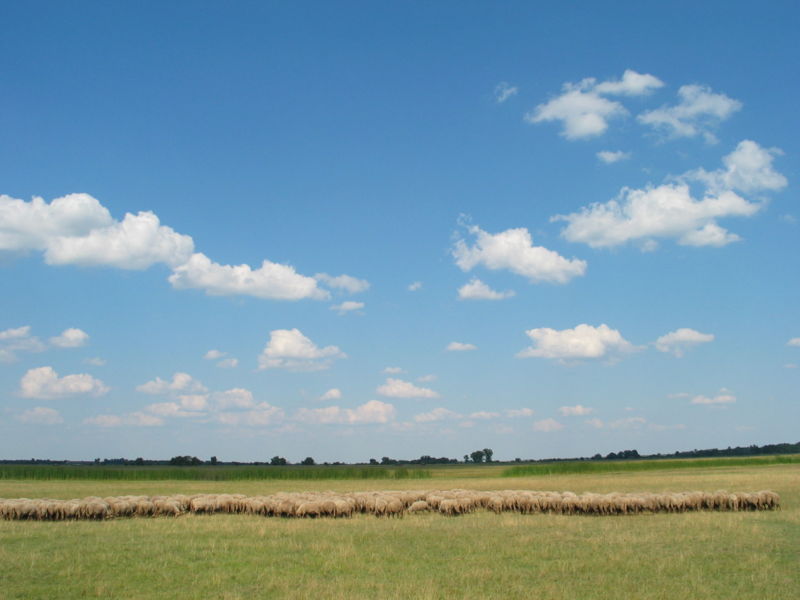
Great Hungarian Plain


Lake Hévíz


Good to know:

       the country is home to the largest thermal water cave system
       the second largest thermal lake in the world - Lake Hévíz
       the largest lake in Central Europe Lake Balaton
       the largest natural grasslands in Europe - Hortobágy

Lake Balaton 


 BUDAPEST


Some own pics about Danube


Hungarian cuisine

  • Hungarians like  soups, vegetable-dish, desserts, pastries and stuffed pancakes 
  • Hungarian foods are often spicy 
  • Hot ground red pepper (paprika), sweet (mild) paprika, onion and garlic is typical of Hungarian cuisine 
  • Traditional dishes such as the Goulash soup, the  Hungarian hot river fish soup called Fisherman's soup is usually a rich mixture of several kinds of fish


  • Pálinka - is a fruit brandy, distilled from fruit grown in the orchards. It is a spirit native to Hungary and comes in a variety of flavours but plum is the most popular flavour
  • Beer - main Hungarian brands are: Borsodi, Soproni, Arany Ászok, Kőbányai
  • Wine:  The country can be divided to 6 wine region
  • The most famous wines from Hungary are Tokaji Aszú, Egri Bikavér, Villányi


Friday, April 13, 2012

More about the EVS


  • Youth in Action is the Programme the European Union has set up for young people. 
  • It aims to inspire a sense of active European citizenship, solidarity and tolerance among young Europeans and to involve them in shaping the Union's future.
  • It promotes mobility within and beyond the EU's borders, non-formal learning and intercultural dialogue, and encourages the employability and inclusion of all young people, regardless of their educational, social and cultural background.


  • EVS is the part of the Youth in Action Programme. EVS means Europe Volunteer Service: it promotes cultural exchanges in Europe.
  • Every European country have many organizations that send and receive volunteers.

Sunday, April 1, 2012

March


Hello everyone!

My name is Tünde, I am a volunteer from Hungary. I arrived to Estonia in March, there was still much of  snow in the country and in Narva as well. I will be here till August, and I’d like to share with you my impressions, experience and life during the project.

I think many people are curious why I’m a volunteer in a foreign country. The answer is very simple: I’d like to know more about Estonia and Narva. Before my arrival my knowledge about this country was deficient. I know that the Baltic state, the capital is Tallinn, there are long and cold winters with too much snow, and the national heroic poem is Kalevipoeg.  And of course I had some stereotypes too, for example: mostly blue-eyed, blond-haired people live here. I thought it would be worthwhile to spend more time here and get to know more this country. Why Narva and why kindergarten? I would like to learn Russian, to improve my English, and to experience other country’s educational system. 

I live in a three bedroom apartment, with another volunteer. In my project I teach English language to 5-7 years old pre-school kids. I take part on the handicraft activities too. The kids are very nice and full of energy all day. They like to play, study, run, swing, play hide-and-seek and seesaw. The work with the children is not easy but imaginative, creative and enjoyable. I like learning with them very much. My day in the kindergarten starts at 8 am and lasts till 1 pm. At around 12 o’clock I have lunch with the kids. I adore this deliciuos dishes, mostly the borscs soup. I was surprised so much, that in a kindergarten in Estonia children learn to read, write and  count; because the system in Hungary is different. The Hungarian kids learn the same things in primary school. 

I have to speak about my first meeting with my group. The children sang me a lovely English song and made me a present: 


In March I had an opportunity to learn more things about Estonia in general. I took part in my On-arrival training, which took place in Rakvere. We spent four days in a hotel, talking about our expectations, motivations etc. We got some useful tools for making our project easier and more productive. It was very nice to meet people, who are in the same situation as I am. We received really useful information concerning our projects. I had a chance of meeting new volunteers. I hope I will meet them soon again.

Have a nice day!